
Lawn Aeration
Franklin MA
Looking for help with Lawn Aeration Franklin MA?
Are you a Homeowner? Business Owner? Property Manager? Or maybe someone just looking for more information on Lawn Aeration Franklin MA?
You’re in the right place…
DO YOU HAVE THESE PROBLEMS:
• Does your grass often looks stressed?
• Is your soil is hard to the touch?
• Does rainwater puddle up where it used to be absorbed?
A. Buckley Landscaping’s Lawn Aeration services have helped thousands of homeowners, business owners, property managers, and other individuals in Franklin, MA and the surrounding communities. After some research, we’re confident you’ll find us to be the right landscape company to handle your lawn aeration needs.
Why Choose
A. Buckley Landscaping for Lawn Aeration Franklin MA?
In short…Because we have a reputation for quality work and being budget friendly. Our customer service is second to none. Our team is always responsive, courteous, friendly, and respectful.
At A. Buckley Landscaping, we do it all! From conception to completion, we handle every aspect of design, construction, planting, and maintenance. This integrated approach reduces project time and money by streamlining each phase of implementation and eliminating the delays that often plague sub-contracted projects.
With A. Buckley Landscaping, you’ll receive:
- Quality workmanship that is guaranteed to last
- Work from licensed professionals who are honest and hardworking
- Dependable service that is completed on time and on budget
- Free estimates and a fully insured crew
To review the creativity of our design and the quality of our craftsmanship, simply take a look at our Photo Gallery. Our decades worth of landscaping projects speak for themselves! From custom landscape designs to planting projects, patios, stonework, and more — You can trust your yard or business property to our team of experts.
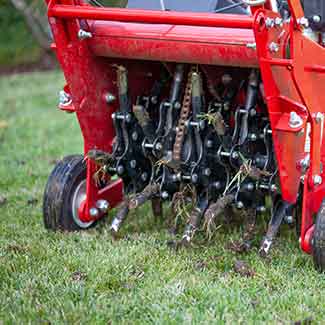
Benefits of
Lawn Aeration:
Improves turf health
Relieves soil compaction
Reduced water runoff and puddling
Benefits pH modification
Prepares grass for winter dormancy/spring green
Full Service Landscaping Company
, MA
Lawn Mowing
MA
Property Maintenance
MA

Landscaping Company

Snow Removal Company
MA
Patios, Walkways, Fire Pits
MA
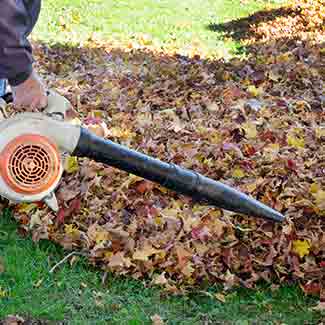
Spring Fall Clean-ups
MA
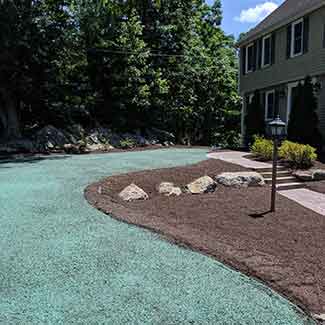
Lawn Installation
MA
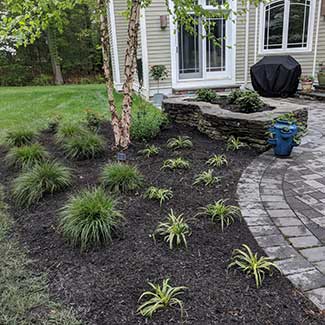
Landscape Design
MA
Lawn Aeration
MA
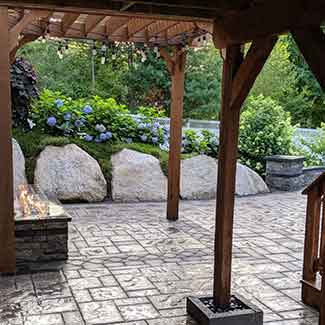
Landscape Construction
MA
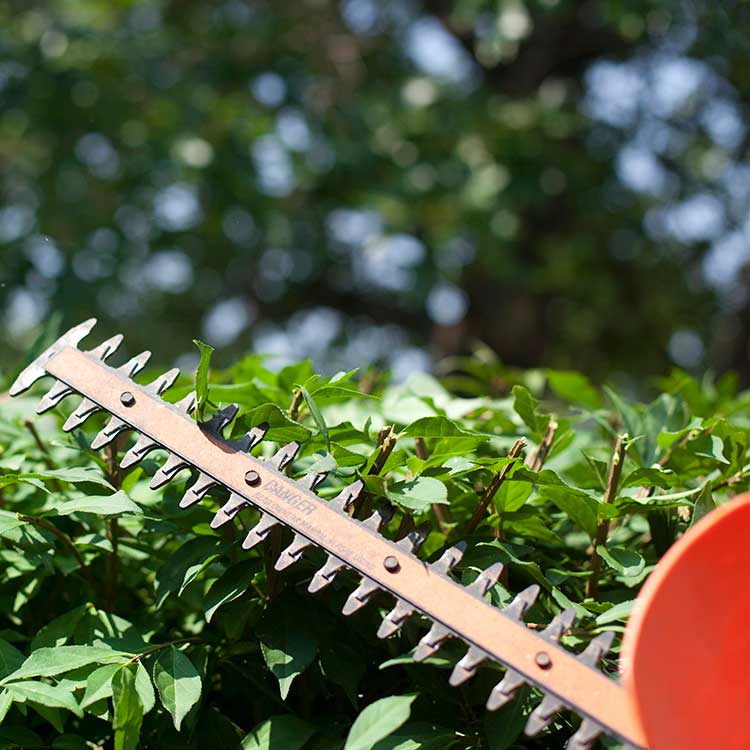
Shrub Care & Pruning
MA
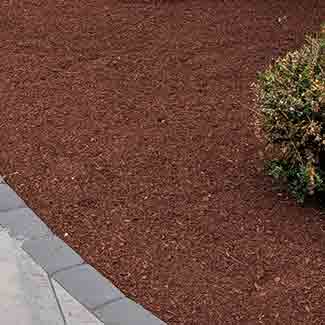
Mulching & Edging
MA
Why is Lawn Aeration Franklin MA Beneficial To My Property?
Spring has finally sprung, but winter left a mess. To start the season off with a bang and get your property in shape, we like to do a thorough once over of your property. We rake compacted beds, remove debris that may have built up over the winter, power blow and hand rake so April showers can get the May flowers popping.
A comprehensive fall clean-up sets the stage for winter. We like to do a thorough rake, vacuum and removal of fall’s glory after it’s hit the decks. We use state of the art equipment to suck up, haul away and recycle what Mother Nature leaves behind. This service is completed after the last mowing of the season, and before November 1st.
★★★★★
Top-Rated Landscaper
Focused On Quality And Service



Franklin, MA
History
Franklin was first settled by Europeans in 1660 and officially incorporated during the American Revolution. The town was formed from the western part of the town of Wrentham, and it was officially incorporated on March 2, 1778; its designated name at incorporation was to be Exeter. However, the town’s citizens opted to call it Franklin, in honor of the statesman Benjamin Franklin, the first municipality in the United States to be so named.
It was hoped that Benjamin Franklin would donate a bell for a church steeple in the town, but he donated 116 books instead, including Night-Thoughts, James Janeway‘s Invisible Realities, and the works of John Locke. On November 20, 1790, it was decided that the volumes would be lent to the residents of Franklin for free via its library, which has been in operation since then as the Franklin Public Library making this the oldest running public library in the nation. The Ray Memorial Library building was dedicated in 1904. In 1990, on the library’s bicentennial, its staff published a booklet, “A History of America’s First Public Library at Franklin Massachusetts, 1790 ~ 1990” to commemorate America’s first public library and book collection.
The town is also home to the birthplace of America’s father of public education, Horace Mann. The town is also home to what may have been the nation’s oldest continuously operational one-room school house (Croydon, New Hampshire‘s school dates to 1780, but there is debate as to whether it is truly “one room”). The Red Brick School was started in 1792, its building constructed in 1833, and was operational until 2008. St. Mary’s Catholic Church, located in central Franklin and built by Matthew Sullivan, is the largest Catholic parish in the Boston Archdiocese with some 15,000 members.
Geography
 |
This section needs additional citations for verification. (November 2022)
|
Franklin is located at 42°5′N 71°24′W / 42.083°N 71.400°W (42.0891, –71.4069). According to the U.S. Census Bureau, the town has a total area of 27.0 square miles (70 km), of which 26.7 square miles (69 km) is land and 0.3 square miles (0.78 km) is water.
Much of the Town of Franklin lies within the Charles River watershed. Principal streams include Mine, Shepard’s, Miller, Uncas, Dix and Miscoe Brooks. Much of the marshland along Mine Brook has been permanently protected by the Natural Valley Storage Project of the U.S. Army Corps of Engineers. The extreme southwestern corner of Franklin is part of the Blackstone River watershed. The town has an impounded series of lakes known as the Franklin Reservoir, which is not used as a public drinking water supply. The lakes are now protected open space.
Ernest DelCarte (1911–2000) bequeathed the land that would become the conservation area to the Town of Franklin. The DelCarte family assisted in the transfer to Franklin in return for the town’s commitment to preserve the land as open space. Worth an estimated $3 million at the time of the transfer of title, the Recreation and Conservation Area received a multi-million-dollar upgrade in 2014. Significant public forests and parks include the Franklin State and the Franklin Town Forests.
External Links
What Does Lawn Aeration Do?
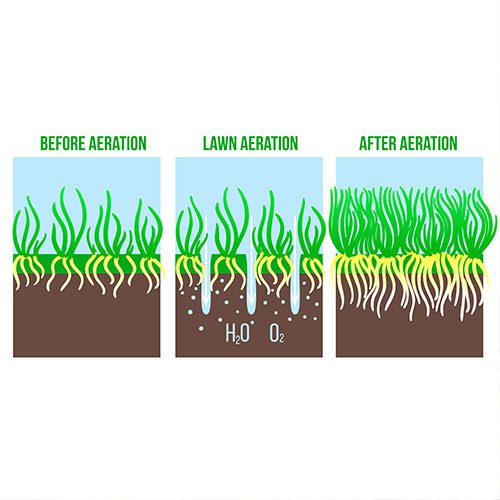
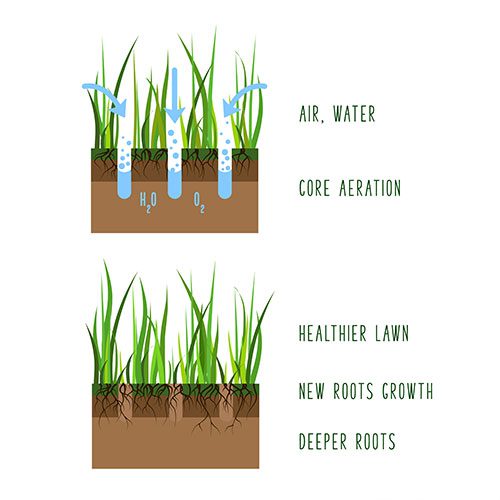
Lawn aeration improves the health of your grass by allowing air, water, and nutrients to reach the roots where they’re needed most. Over time, soil becomes compacted from foot traffic, mowing equipment, and natural settling. When this happens, grass roots struggle to grow deep, leading to thin turf, poor color, and increased weed growth.
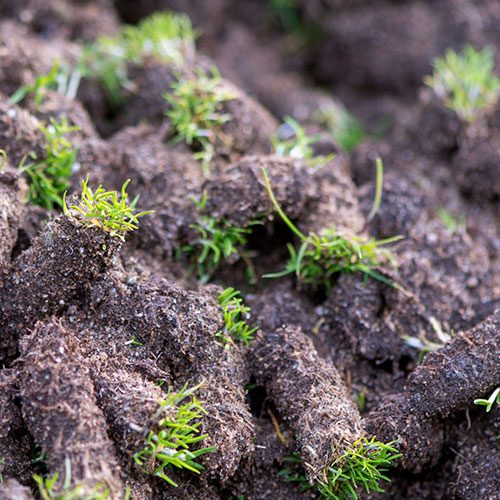
Aeration works by removing small plugs of soil from the lawn, creating openings that relieve compaction and improve root development. These holes allow fertilizer and moisture to penetrate deeper into the soil instead of running off the surface. As a result, grass develops stronger roots, becomes more drought-resistant, and recovers faster from stress caused by heat or heavy use.
Aeration is especially beneficial for lawns with heavy clay soil or high traffic areas. When paired with overseeding and proper fertilization, aeration leads to thicker, greener grass and a healthier lawn overall.
If your lawn looks tired or struggles to grow, professional aeration is one of the most effective ways to restore its strength and appearance.
What Makes Us Different?
Licensed Pros
We’re licensed and insured to handle all your requests.
budget Friendly
We're willing to discuss projects constrained by a budget.
Quick Service
We show up on time and finish ahead of schedule regularly.
Friendly Team
Our crew is pleasant and easy to talk to on the job site.
How often does a lawn need to be aerated?
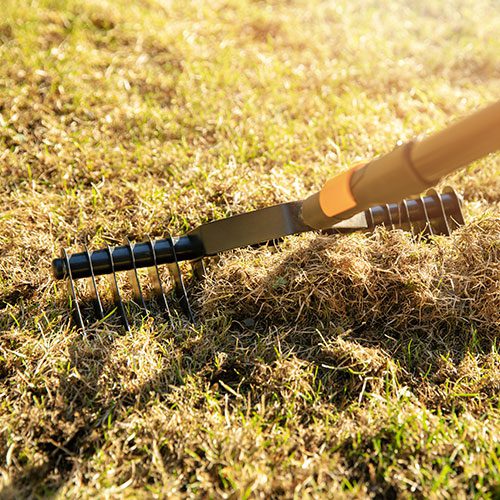
Most lawns benefit from aeration once per year, but the ideal frequency depends on soil type, lawn usage, and overall turf health. For the average residential lawn with moderate foot traffic, annual aeration is enough to relieve soil compaction and keep grass roots healthy and strong.
If your lawn has heavy clay soil, frequent use from kids or pets, or sees a lot of traffic, aeration may be needed twice per year—typically in the spring and fall. Clay soil compacts more easily, restricting air and water movement, which weakens root growth over time.
Lawns with sandy soil or minimal traffic may only need aeration every two to three years, as these soils drain more naturally and resist compaction.
The best time to aerate is during your grass’s active growing season—fall for cool-season grasses and late spring for warm-season grasses. This allows the lawn to recover quickly and maximize results.
If your lawn feels hard underfoot, struggles to absorb water, or looks thin despite proper care, it’s likely overdue for aeration. A professional lawn evaluation can determine the right schedule and ensure your lawn gets exactly what it needs to thrive.

Talk to an Expert
We understand that sometimes you just want to talk before scheduling a consultation.
Our team will gladly answer any of your questions or help you with any of your concerns.
Call (508) 954-1612 or Schedule Online!
What are signs your lawn needs aeration?
There are several clear signs that your lawn needs aeration, and most homeowners notice them long before they realize compaction is the real issue.
One of the most common signs is water pooling or runoff after rain or irrigation. If water sits on the surface instead of soaking into the soil, compacted ground is preventing proper absorption.
Another indicator is thin or patchy grass, even when you’re watering and fertilizing correctly. When soil is compacted, roots can’t grow deep or access nutrients, causing grass to weaken and struggle.
If your lawn feels hard or spongy underfoot, that’s another red flag. Hard soil means air and nutrients aren’t reaching the roots. A spongy feel often points to excessive thatch buildup, which aeration helps break down.
Heavy foot traffic from kids, pets, or entertaining can also compact soil over time. If certain areas wear down faster than others, aeration can restore balance and encourage even growth.
You may also notice your lawn drying out quickly during warm weather. Shallow roots caused by compaction can’t retain moisture, making grass more vulnerable to heat stress.
If you’re seeing one or more of these signs, your lawn is telling you it needs help. Professional aeration, especially when paired with overseeding and fertilization, can dramatically improve thickness, color, and resilience—bringing your lawn back to life.
Testimonials From Happy Customers
Request A Free Quote Today!
We'd be happy to come evaluate your property, discuss your needs, and provide you with a competitive quote.