
Mulching Edging
Foxborough MA
Looking for help with Mulching Edging Foxborough MA?
Are you a Homeowner? Business Owner? Property Manager? Or maybe someone just looking for more information on Mulching Edging Foxborough MA?
You’re in the right place…
DO YOU HAVE THESE PROBLEMS:
• Discolored or old mulch?
• Overgrown weeds and debris?
• Inconsistent bare spots?
• Need new mulch installed?
A. Buckley Landscaping’s Mulching Edging services have helped thousands of homeowners, business owners, property managers, and other individuals in Foxborough, MA and the surrounding communities. After some research, we’re confident you’ll find us to be the right landscape company to handle yourspring fall clean-ups.
Why Choose
A. Buckley Landscaping for Mulching Edging Foxborough MA?
In short…Because we have a reputation for quality work and being budget friendly. Our customer service is second to none. Our team is always responsive, courteous, friendly, and respectful.
At A. Buckley Landscaping, we do it all! From conception to completion, we handle every aspect of design, construction, planting, and maintenance. This integrated approach reduces project time and money by streamlining each phase of implementation and eliminating the delays that often plague sub-contracted projects.
With A. Buckley Landscaping, you’ll receive:
- Quality workmanship that is guaranteed to last
- Work from licensed professionals who are honest and hardworking
- Dependable service that is completed on time and on budget
- Free estimates and a fully insured crew
To review the creativity of our design and the quality of our craftsmanship, simply take a look at our Photo Gallery. Our decades worth of landscaping projects speak for themselves! From custom landscape designs to planting projects, patios, stonework, and more — You can trust your yard or business property to our team of experts.
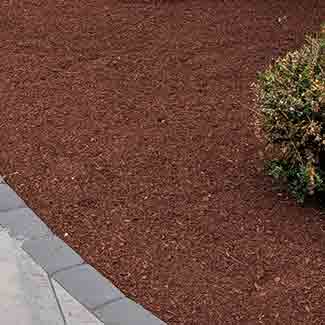
Benefits of
Mulching Edging:
Insulates soil from weather
Keeps roots moist
Keeps weeds out
Prevents soil compaction
Full Service Landscaping Company
, MA
Lawn Mowing
MA
Property Maintenance
MA

Landscaping Company

Snow Removal Company
MA
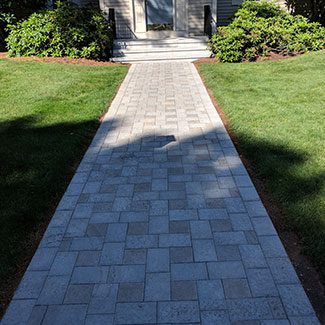
Patios, Walkways, Fire Pits
MA
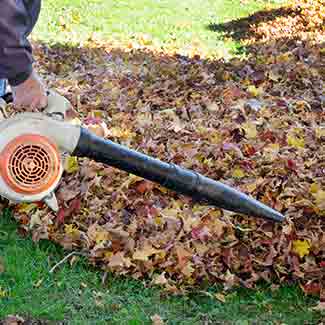
Spring Fall Clean-ups
MA
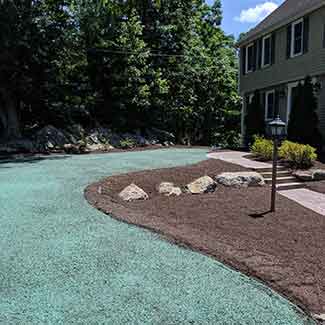
Lawn Installation
MA
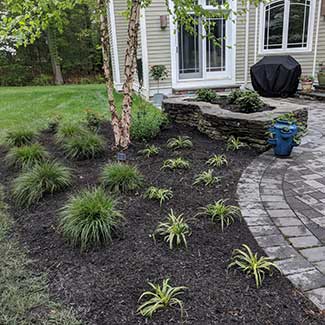
Landscape Design
MA
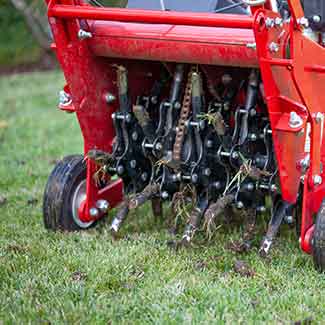
Lawn Aeration
MA
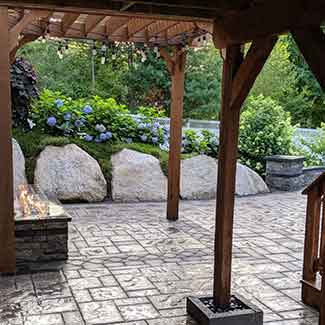
Landscape Construction
MA
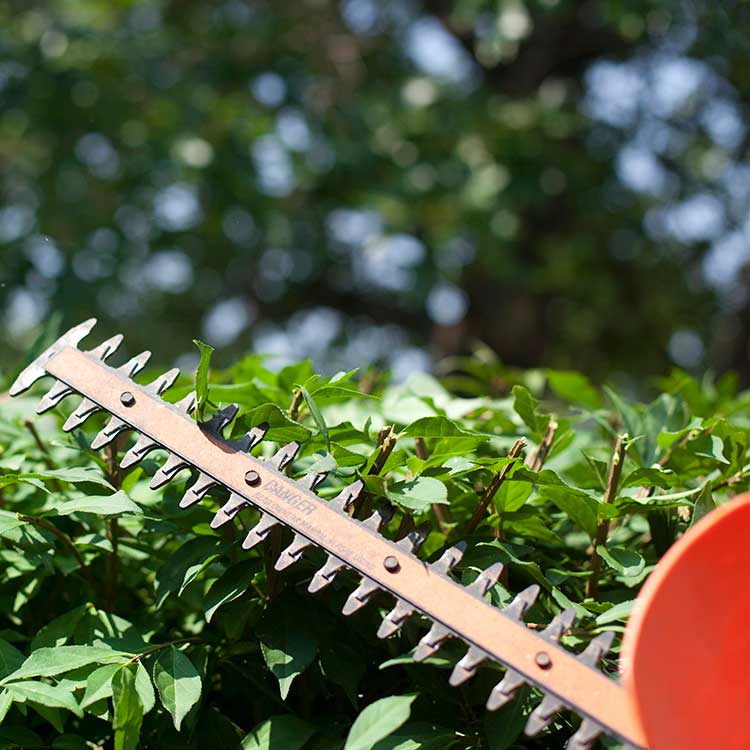
Shrub Care & Pruning
MA
Mulching & Edging
MA
How much does professional mulching cost?
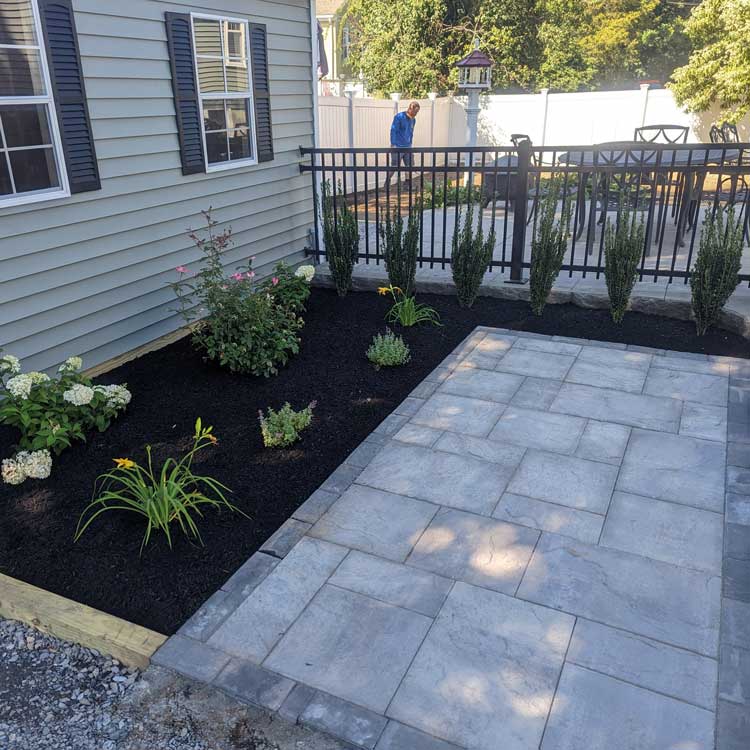
Professional mulching is one of the most cost-effective ways to boost your landscape’s health and curb appeal—and most homeowners are surprised how affordable it really is. On average, professional mulching costs between $80 and $150 per cubic yard of mulch installed, depending on the type of material you choose and the size of the area.
Here’s how the pricing typically breaks down:
Basic Mulch (Shredded Bark or Hardwood): Usually the most affordable option, ideal for routine maintenance.
Premium Mulch (Colored, Cedar, or Specialty Blends): Costs more but lasts longer, resists fading, and enhances landscape aesthetics.
Installation Included: Professional pricing includes delivery, spreading, bed cleanup, edging, and disposal of old mulch—so you’re not left with the heavy labor.
For most homeowners with average-sized beds, a full professional mulch application typically ranges from $200 to $600 total. Larger properties, thicker mulch depths, or premium materials can increase costs modestly.
More importantly than price alone is value: professional mulching helps suppress weeds, retain soil moisture, regulate soil temperatures, and give your landscape a finished, clean look. Mulch that’s installed poorly or unevenly often blows away, compacts, or fades quickly—negating any savings.
If you want a lush, polished landscape that performs season after season, professional mulching is a smart investment. Schedule a consultation to get an accurate estimate and a plan tailored to your yard.
★★★★★
Top-Rated Landscaper
Focused On Quality And Service



Foxborough, MA
History
Settled in 1704 and incorporated in 1778, the town of Foxborough was named for Charles James Fox, a Whig member of Parliament and a staunch supporter of the Colonies in the years leading up to the American Revolution.
The town was once home to the world’s largest straw hat factory, erected in 1886. The building became the Bay State Boot and Shoe Company which closed in 1891. In 1894, the building became the Inman and Kimball hat factory. It burned to the ground during a spectacular mid-day fire in 1936. The Foxborough Post Office now stands on the site.
Foxborough was composed of small neighborhood communities until the early 1900s. These included Foxvale/Paineburgh, which remained semi-independent until the early twentieth century; Quaker Hill in South Foxborough; and Lakeview/Donkeyville in West Foxborough.
Schaefer Stadium (later known as Sullivan Stadium, then Foxboro Stadium) opened in 1971 as the home of the New England Patriots, after the football team spent its first eleven seasons playing at various stadiums in Boston. The family of Billy Sullivan owned both the Patriots and the stadium until they sold the team in 1988. The stadium, however, lapsed into bankruptcy and was then bought by paper magnate Robert Kraft. With Kraft in control of Foxboro Stadium, he prevented the Patriots from relocating to St. Louis in 1994 by refusing to let the team break their lease, then bought the Patriots outright. Kraft then founded the New England Revolution, one of the charter clubs of Major League Soccer, in 1996.
Gillette Stadium opened in 2002 as a replacement for Foxboro Stadium. The Patriot Place shopping plaza, built on land surrounding the stadium bought by Kraft, completed construction in 2009. The plaza includes a variety of restaurants, clothing stores, and other retailers.
Foxborough hosted multiple matches during the 1994 FIFA World Cup at Foxboro Stadium and will do so again during the 2026 FIFA World Cup at Gillette Stadium.
Geography
According to the United States Census Bureau, the town has a total area of 20.9 sq mi (54.1 km), of which 20.1 sq mi (52.0 km) is land and 0.81 sq mi (2.1 km) (3.88%) is water.
For the purposes of the United States Census Bureau, the built-up central area of Foxborough known as the Foxborough Census Designated Place (CDP) has a total area of 7.6 km (2.9 sq mi), of which 7.5 km (2.9 sq mi) is land and 0.1 km (0.039 sq mi) (1.69%) is water.
Foxborough’s climate is humid continental (Köppen: Dfa) with four distinct seasons, which is the predominant climate for Massachusetts and New England. Summers are typically warm to hot, rainy, and humid, while winters are cold, windy, and snowy. Spring and fall are usually mild, but conditions are widely varied, depending on wind direction and jet stream positioning. The warmest month is July, with an average high temperature of 83 °F and an average low temperature of 62 °F. The coldest month is January, with an average high temperature of 36 °F and an average low temperature of 18 °F. Periods exceeding 90 °F in summer and below 10 °F in winter are not uncommon but rarely extended, with about 14 days per year seeing the former extreme. Because of the town’s relatively short distance from the Atlantic Ocean, temperatures tend to remain warmer than locations further inland. Like the rest of the northeastern seaboard, precipitation is distributed fairly evenly throughout the entire year, with the winter months receiving slightly more precipitation than the summer months. Powerful storm systems known as Nor’easters can produce heavy amounts of rain and snow at any time of the year, but these storms most often strike during the winter months, causing significant snowfall amounts and blizzard conditions. Thunderstorms occur somewhat frequently in the summer, occasionally bringing heavy downpours, damaging winds, and hail. Tornado activity is relatively low in the area, although there have been a fair share of tornado warnings issued over the years. Due to its location along the United States eastern seaboard, Foxborough is somewhat vulnerable to Atlantic hurricanes and tropical storms that threaten the region from late summer into early autumn.
External Links
What Benefits Does Mulch Bring to Your Property?
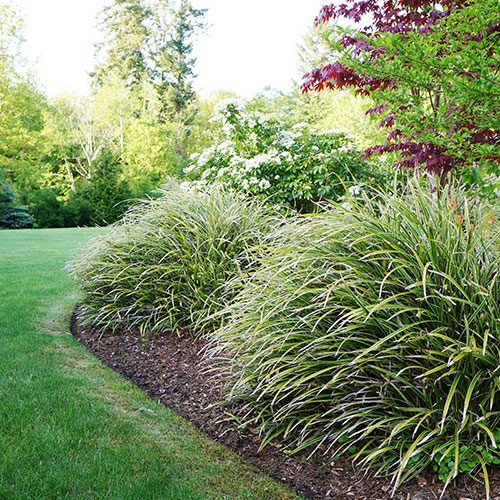
Mulch delivers some of the highest return-on-investment benefits of any landscaping service, both visually and functionally. When applied correctly, mulch improves plant health, reduces maintenance, and instantly elevates curb appeal.
One of the biggest benefits of mulch is moisture retention. Mulch helps soil hold water longer, reducing the need for frequent watering and protecting plants during hot, dry periods. This is especially important for shrubs, trees, and newly planted beds.
Mulch also plays a critical role in weed suppression. By blocking sunlight from reaching the soil surface, mulch significantly reduces weed growth, saving you time, frustration, and money on weed control throughout the season.
Another key benefit is soil temperature regulation. Mulch insulates plant roots, keeping them cooler in summer and protecting them from freeze-thaw cycles in winter. This leads to stronger root systems and healthier, longer-lasting plants.
From an aesthetic standpoint, fresh mulch provides a clean, finished look that instantly boosts curb appeal and makes planting beds stand out. It also helps define landscape edges and creates contrast against lawns and hardscapes.
Over time, organic mulch breaks down and improves soil quality, adding nutrients and encouraging beneficial microorganisms.
In short, mulch protects your landscape investment while making your property look polished and well cared for. Professional mulching ensures proper depth, clean edges, and long-lasting results, giving you maximum benefit with minimal upkeep.
What Makes Us Different?
Licensed Pros
We’re licensed and insured to handle all your requests.
budget Friendly
We're willing to discuss projects constrained by a budget.
Quick Service
We show up on time and finish ahead of schedule regularly.
Friendly Team
Our crew is pleasant and easy to talk to on the job site.
What month should you mulch?
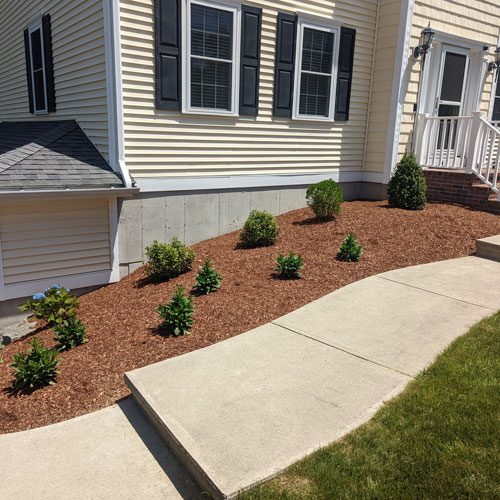
The best time to mulch is typically spring, with April and May being the most popular and effective months for most homeowners. Mulching in spring helps lock in soil moisture, regulate soil temperature as the weather warms, and suppress weeds before they have a chance to take over your landscape beds.
Spring mulching also gives your property an immediate visual refresh. Fresh mulch defines planting beds, highlights shrubs and trees, and instantly boosts curb appeal after a long winter.
That said, fall mulching—usually October or November—also has important benefits. Fall mulch acts as insulation, protecting plant roots from harsh winter temperature swings and freeze-thaw cycles. It’s especially beneficial for newly planted shrubs, trees, and perennials that need extra protection going into winter.
What you want to avoid is mulching too early in spring, before the soil has had a chance to warm up. Mulching frozen or overly cold soil can slow plant growth and delay healthy root activity.
For most properties, the ideal approach is:
Spring mulching for weed control, moisture retention, and appearance
Optional fall mulching for winter protection and soil health
Timing matters, but so does proper installation. Correct mulch depth, clean edging, and keeping mulch away from plant stems are critical to avoid rot and disease.
If you want maximum benefit and a polished look that lasts all season, a professional mulching service ensures your landscape is protected, healthy, and looking its best at the right time of year.

Talk to an Expert
We understand that sometimes you just want to talk before scheduling a consultation.
Our team will gladly answer any of your questions or help you with any of your concerns.
Call (508) 954-1612 or Schedule Online!
Should You Remove Old Mulch Before Applying New?
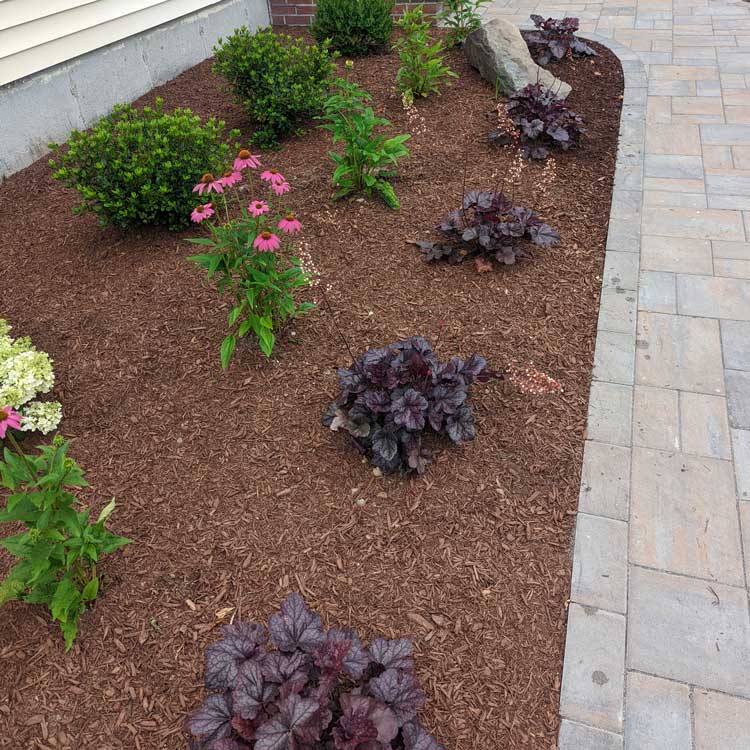
In most cases, yes—old mulch should be removed or reduced before applying new mulch. Simply piling fresh mulch on top of old layers is one of the most common landscaping mistakes and can actually harm your plants over time.
When mulch builds up too thick, it prevents water and oxygen from reaching the soil. This can lead to root rot, fungal growth, pest issues, and shallow root systems. Over-mulching—often called “mulch volcanoes”—is especially damaging around shrubs and trees.
That said, old mulch doesn’t always need to be completely removed. A professional approach evaluates the existing depth first. If there is more than 2–3 inches of mulch already in place, excess material should be removed before adding new mulch. If the old mulch has broken down into soil-like material, it can often be incorporated into the soil to improve structure and nutrients.
Removing old mulch also allows for proper bed cleanup, weed removal, edge redefining, and inspection of plant health. This ensures the new mulch is applied evenly, at the correct depth, and away from plant stems and trunks.
The goal isn’t just appearance—it’s performance. Proper mulch management improves moisture retention, reduces weeds, and protects root systems without suffocating them.
If you want your landscape to stay healthy and polished year after year, professional mulching is the safest option. A trained crew knows when to remove, reduce, or reuse existing mulch—protecting your plants and your investment.
Testimonials From Happy Customers
Request A Free Quote Today!
We'd be happy to come evaluate your property, discuss your needs, and provide you with a competitive quote.