
Shrub Care & Pruning
Sharon MA
Looking for help with Shrub Care & Pruning Sharon MA?
Are you a Homeowner? Business Owner? Property Manager? Or maybe someone just looking for more information on Shrub Care & Pruning Sharon MA?
You’re in the right place…
DO YOU HAVE THESE PROBLEMS:
- Overgrown Shrubs: Struggling with shrubs that have grown too large and are taking over your garden? Our pruning services can help you regain control.
- Poor Growth: Noticing that your shrubs aren’t growing as they should? We can assess and improve their health.
- Unsightly Appearance: Want your shrubs to look more aesthetically pleasing? Our expert pruning ensures they are shaped beautifully.
- Seasonal Maintenance: Need regular maintenance for your shrubs throughout the year? We offer seasonal care plans.
A. Buckley Landscaping’s Shrub Care & Pruning services have helped thousands of homeowners, business owners, property managers, and other individuals in Sharon, MA and the surrounding communities. After some research, we’re confident you’ll find us to be the right landscape company to handle your Shrub Care and Pruning needs.
Why Choose
A. Buckley Landscaping for Shrub Care & Pruning Sharon MA?
In short…Because we have a reputation for quality work and being budget friendly. Our customer service is second to none. Our team is always responsive, courteous, friendly, and respectful.
At A. Buckley Landscaping, we do it all! From conception to completion, we handle every aspect of design, construction, planting, and maintenance. This integrated approach reduces project time and money by streamlining each phase of implementation and eliminating the delays that often plague sub-contracted projects.
With A. Buckley Landscaping, you’ll receive:
- Quality workmanship that is guaranteed to last
- Work from licensed professionals who are honest and hardworking
- Dependable service that is completed on time and on budget
- Free estimates and a fully insured crew
To review the creativity of our design and the quality of our craftsmanship, simply take a look at our Photo Gallery. Our decades worth of landscaping projects speak for themselves! From custom landscape designs to planting projects, patios, stonework, and more — You can trust your yard or business property to our team of experts.
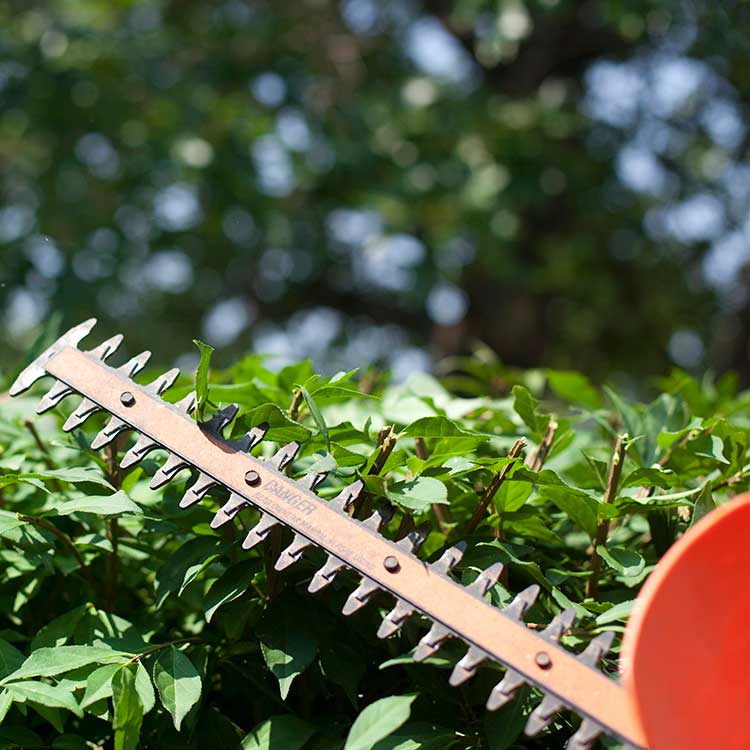
Benefits of
Shrub Care & Pruning:
Enhanced appearance
Healthier shrubs
Encourages growth
Seasonal maintenance
Increases property value
Environmentally friendly
Full Service Landscaping Company
, MA
Lawn Mowing
MA
Property Maintenance
MA

Landscaping Company

Snow Removal Company
MA
Patios, Walkways, Fire Pits
MA
Spring Fall Clean-ups
MA
Lawn Installation
MA
Landscape Design
MA
Lawn Aeration
MA
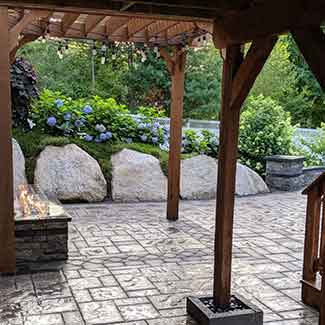
Landscape Construction
MA
Shrub Care & Pruning
MA
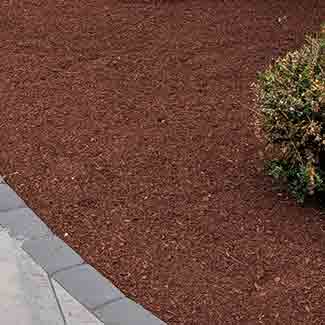
Mulching & Edging
MA
What is shrub care and maintenance?
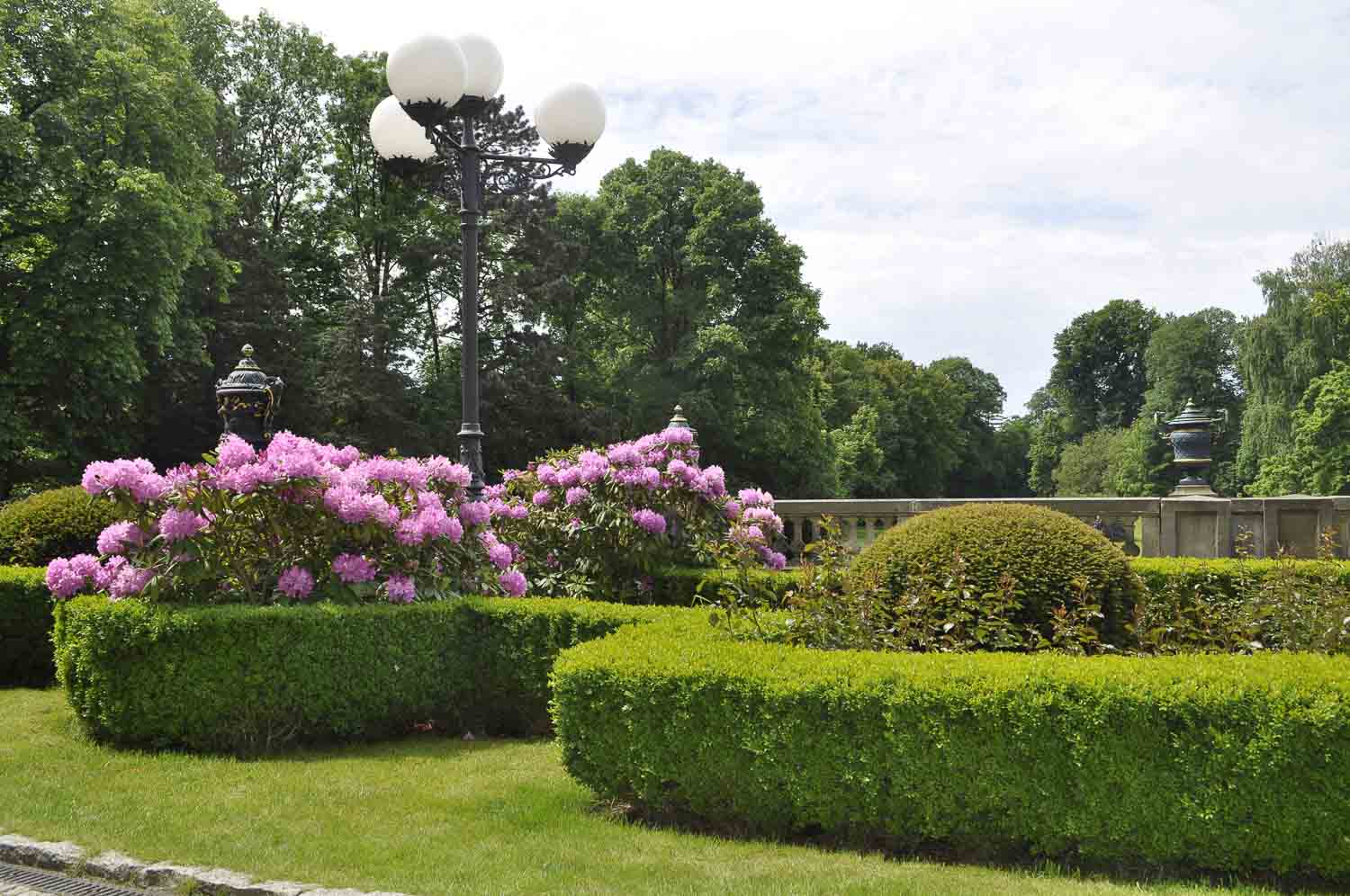
Shrub maintenance is the ongoing care required to keep shrubs healthy, attractive, and properly shaped throughout the year. It goes far beyond occasional trimming—professional shrub maintenance focuses on long-term plant health, controlled growth, and clean visual presentation across your entire landscape.
Core shrub maintenance includes strategic pruning, which removes dead, damaged, or overgrown branches while encouraging healthy growth and proper form. Correct pruning timing is critical; cutting at the wrong time of year can weaken plants, reduce flowering, or cause disease issues.
Shrub maintenance also involves size and shape management. Shrubs that are left unattended often become oversized, block windows, crowd walkways, or overtake nearby plants. Routine maintenance keeps shrubs proportional to your home and landscape design instead of turning into unmanageable masses.
Additional services include fertilization, pest and disease monitoring, and mulching. Proper nutrients strengthen root systems, while early detection of insects or fungal issues prevents widespread damage. Mulch helps retain moisture, regulate soil temperature, and protect roots.
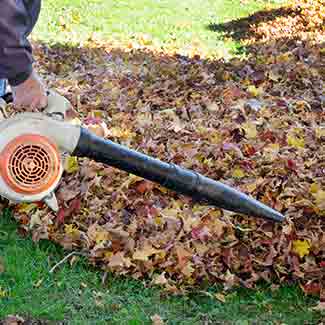
Seasonal cleanups are another important part of shrub maintenance, removing debris and preparing plants for winter or spring growth.
Well-maintained shrubs dramatically improve curb appeal and reduce replacement costs over time. Professional shrub maintenance protects your investment, keeps your landscape polished, and ensures plants grow the way they were intended—not wild, stressed, or neglected.
If your shrubs look uneven, overgrown, or tired, a maintenance plan can restore structure, health, and long-term beauty.
★★★★★
Top-Rated Landscaper
Focused On Quality And Service



Sharon, MA
History
The Town of Sharon was first settled as part of the Massachusetts Bay Colony in 1637 and was deemed the 2nd precinct of Stoughton in 1740. It was established as the district of Stoughtonham on June 21, 1765, incorporated as the Town of Stoughtonham on August 23, 1775, and was named Sharon on February 25, 1783, after Israel’s Sharon plain, due to its high level of forestation. Several towns in New England were given this name. Part of Stoughtonham went to the new town of Foxborough on June 10, 1776. During the American Revolution, the townspeople of Sharon made cannonballs and cannons for the Continental Army at a local foundry.
In front of the Sharon Public Library stands a statue of Deborah Sampson, Sharon’s town heroine. Sampson disguised herself as a man to fight in the Revolutionary War. After the war, she married Benjamin Gannett, a farmer, and lived in Sharon until the end of her life. Sampson began a campaign in 1790 to secure a pension from her time in the Revolutionary War, which earned the support of well known public figures, including Paul Revere. In 1804, Revere visited Sampson (then Sampson Gannett) at her farm in Sharon and wrote to the congressman of her district, William Eustis, that he found her “much more deserving than hundreds to whom Congress have been generous.” Sampson was placed on the United States pension list a year later, and awarded an annual payment. She is buried in the local Rock Ridge Cemetery. A street in Sharon is named Deborah Sampson Street in her honor. In 1983, the Massachusetts General Court designated Sampson as the official State Heroine of the Commonwealth of Massachusetts.
The Unitarian and Congregational churches in the center of Sharon both have church bells manufactured by Paul Revere.
The recipient of letters from across the United States in Stanley Milgram‘s small-world experiment lived in Sharon.
Sharon is the former home of the Kendall Whaling Museum, founded by Henry P. Kendall in 1955. In 2001, the museum was merged with the New Bedford Whaling Museum, and its collection is now part of that museum, though the archives of the museum are still held in Sharon.
In Sharon there are six historical properties or districts that are registered with the state. Of the six, five are listed
on the National Register and three are certified local historic districts:
In 1970, Sharon’s First Historic District becomes an LHD. This is the area on North Main Street from Post
Office Square to School Street and includes the Library and the Unitarian and Congregational Churches. It
becomes a National Register District in 1975. In 1974 Cobb’s Tavern becomes a National Historic Landmark. Located at 41 Bay Road, it becomes
Sharon’s Second Historic District in 1991. In 1980, Stoneholm, located at 188 Ames Street, becomes a National Historic Landmark. In 1984, the Stoughtonham Furnace Site (partially in Foxborough) becomes a National Historic Landmark. In 1997, Borderland State Park (partially in Easton) becomes a National Register District. In 2004, Sharon’s Third Historic District was approved by Town Meeting and accepted by the Commonwealth.
This includes the Charles R. Wilber School, the Pleasant Street School, and the Kate Morrell Park.
Geography
According to the United States Census Bureau, the town has a total area of 24.2 square miles (62.6 km), of which 23.3 square miles (60.4 km) is land and 0.9 square mile (2.2 km) (3.56%) is water. This includes Lake Massapoag, which is one of the town’s most prominent features and a popular recreational site for swimming and boating. It was largely responsible for the town’s early development as a summer resort location. Massapoag is drained by the Canoe River to the south, and Massapoag Brook to the north.
Sharon is located in a continental climate, like most of New England and most of the Northeastern and Midwestern United States. It is cooler than coastal New England locations because it is inland. The town has warm to hot summers and cold winters. It is often humid in the summer. Sharon receives about 50 inches of precipitation every year on average. According to the Köppen Climate Classification system, Sharon has a humid continental climate, abbreviated “Dfb” on climate maps.
External Links
What is pruning a shrub?

Pruning a shrub is the process of selectively cutting back branches to improve the plant’s health, shape, and long-term growth. It’s not just about making shrubs look neat—proper pruning helps them grow stronger, fuller, and more resilient over time.
When shrubs aren’t pruned correctly, they can become overgrown, leggy, or stressed. Dead, damaged, or diseased branches restrict airflow and invite pests and disease. Pruning removes these problem areas, allowing the plant to direct energy toward healthy growth.
Pruning also controls size and structure. Without regular pruning, shrubs can block windows, overtake walkways, or crowd other plants. A professional approach ensures shrubs stay proportional to your home and landscape design while maintaining their natural form rather than being hacked into unnatural shapes.
Timing is critical when pruning shrubs. Some shrubs bloom on old growth, while others bloom on new growth. Pruning at the wrong time can reduce flowering for an entire season. Professionals understand when and how much to prune based on the shrub species and local climate.
In addition to aesthetics, pruning encourages thicker growth, better flowering, and improved air circulation, all of which contribute to healthier plants.
Done correctly, pruning extends the life of shrubs and keeps your landscape clean, intentional, and attractive year-round. Professional shrub pruning protects your investment and ensures your plants look their best without risking damage or poor growth.
What Makes Us Different?
Licensed Pros
We’re licensed and insured to handle all your requests.
budget Friendly
We're willing to discuss projects constrained by a budget.
Quick Service
We show up on time and finish ahead of schedule regularly.
Friendly Team
Our crew is pleasant and easy to talk to on the job site.
What are the five rules of pruning?
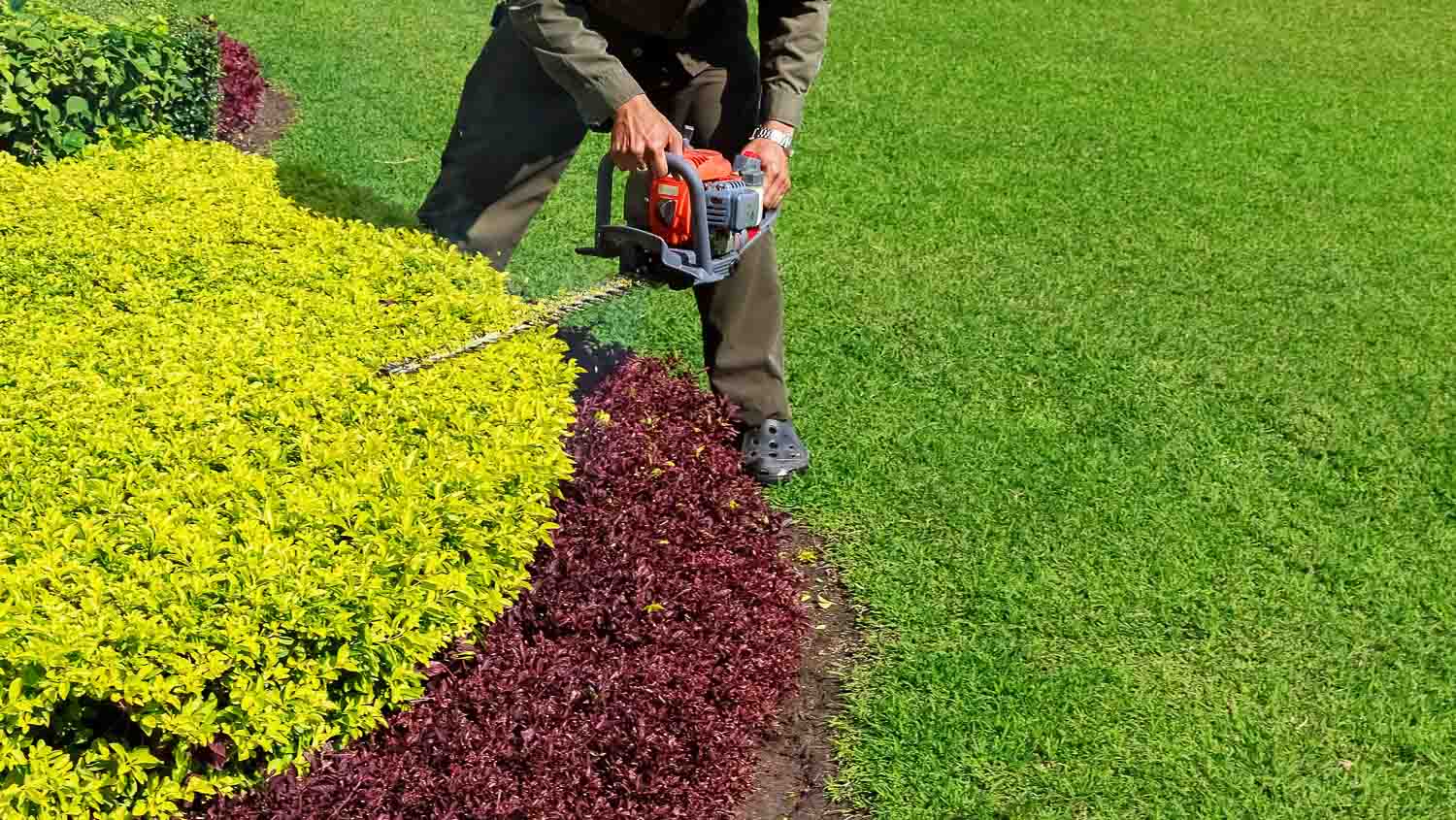
Pruning isn’t about cutting plants back at random. When done correctly, it strengthens plants, improves appearance, and prevents long-term problems. When done wrong, it can permanently damage shrubs and trees. Here are the five essential rules of pruning every healthy landscape follows.
1. Prune with a purpose
Every cut should have a reason—removing dead wood, improving structure, encouraging growth, or maintaining size. Random or aggressive cutting weakens plants and creates uneven, unnatural growth.
2. Prune at the right time
Timing matters. Pruning at the wrong time can eliminate flowers, stress plants, or trigger weak growth. Spring-flowering shrubs are pruned after blooming, while summer-flowering and non-flowering shrubs are typically pruned in late winter or early spring.
3. Never remove more than 25–30% at once
Over-pruning shocks plants. Removing too much foliage at one time forces stressed regrowth and increases the risk of disease, sun damage, and dieback.
4. Make clean, proper cuts
Cuts should be clean, angled correctly, and made at the right location—never ripped, crushed, or flush-cut. Poor cuts invite pests and disease and slow healing.
5. Respect the plant’s natural shape
Shrubs and trees should be guided—not forced—into shape. Shearing everything into tight balls or boxes leads to weak outer growth and dead interiors over time.
Professional pruning follows these rules every time. A trained eye knows where, when, and how to cut without causing damage. If you want healthier plants, better flowering, and a polished landscape year-round, start with expert pruning done the right way.

Talk to an Expert
We understand that sometimes you just want to talk before scheduling a consultation.
Our team will gladly answer any of your questions or help you with any of your concerns.
Call (508) 954-1612 or Schedule Online!
What month should you prune shrubs?
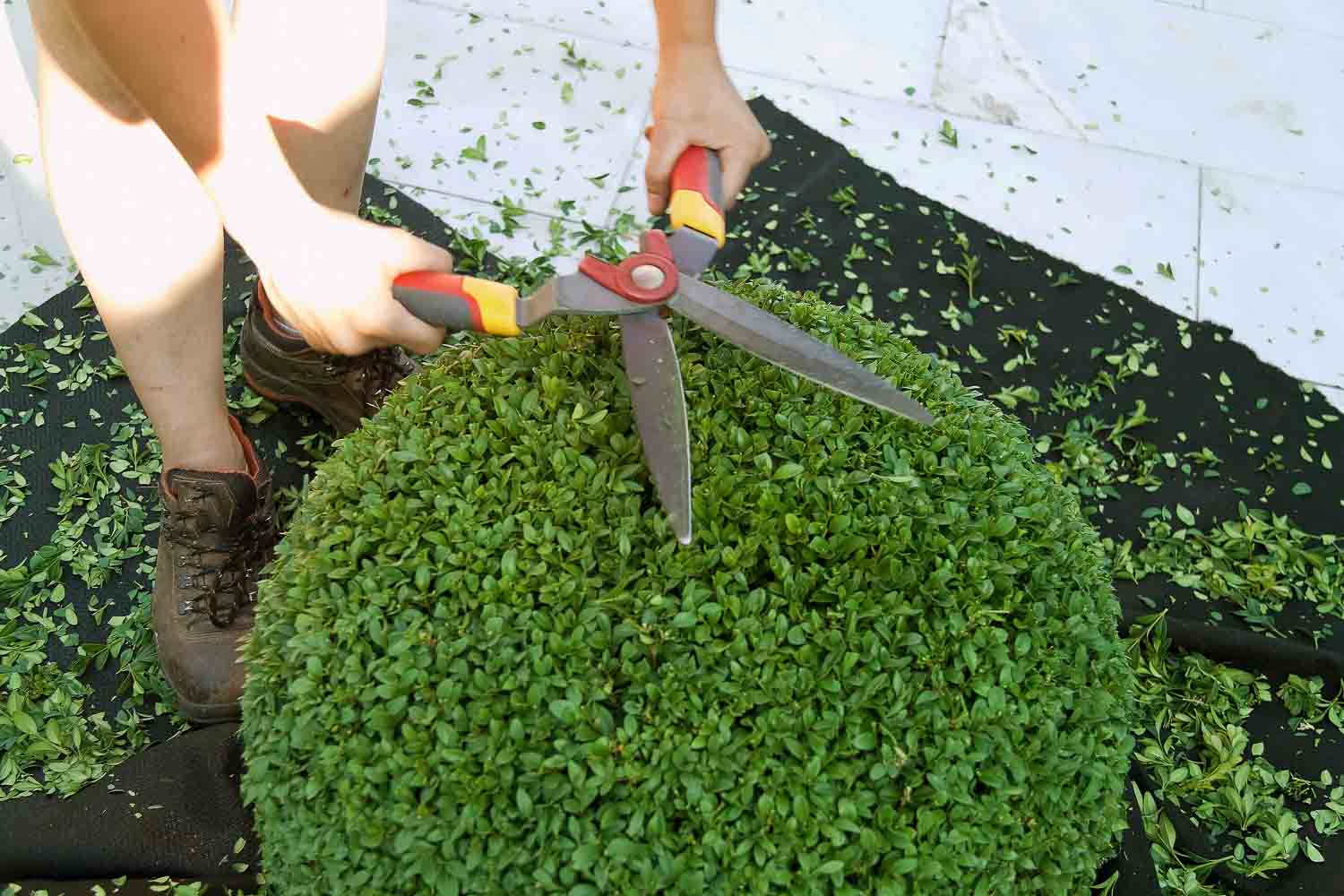
The best month to prune shrubs depends on the type of shrub and when it blooms, but for most landscapes, pruning is done in late winter to early spring—typically February through April in many regions. This timing allows shrubs to heal quickly and push strong new growth as the growing season begins.
For non-flowering shrubs or shrubs grown mainly for their shape, late winter or early spring pruning is ideal. Plants are still dormant, branches are easy to see, and pruning at this time encourages healthy, controlled growth without stressing the plant.
Flowering shrubs require more specific timing. Shrubs that bloom in spring, such as lilac or forsythia, should be pruned right after they finish flowering—usually in late spring or early summer. Pruning them too early can remove the buds and eliminate blooms for the year.
Shrubs that bloom in summer, like hydrangeas and butterfly bush, are best pruned in late winter or early spring, as they flower on new growth.
Light maintenance pruning can be done during summer to control size, but heavy pruning in late fall is generally discouraged. Cutting too late in the season can stimulate new growth that won’t harden off before winter, leading to damage.
Because timing matters, guessing can be costly. Professional shrub pruning ensures the right cuts are made at the right time, protecting blooms, plant health, and curb appeal. If you’re unsure when to prune, a consultation can save you from expensive mistakes and disappointing results.
Testimonials From Happy Customers
Request A Free Quote Today!
We'd be happy to come evaluate your property, discuss your needs, and provide you with a competitive quote.